- Home
- Blog
- Designers & Collections
- 40 years of Serax: one...
40 years of Serax: one brand, many signatures

40 years of Serax: how designers shaped the brand
A hand-painted plate, a precisely shaped coffee cup, a sculptural lamp and a fish-shaped carafe may not seem to have much in common. And they do not need to. They were drawn by different hands, from entirely different points of view.
That is precisely where Serax found its strength. The Belgian design brand did not build its identity by repeating one recognisable style. Instead, it gave designers, architects, artists, chefs and fashion designers the freedom to develop their own ideas. Forty years later, Serax spans distinctive dinnerware collections, glassware, cutlery, lighting, furniture and objects that refuse to fit neatly into a single category.
40 years of Serax. Celebrate with an icon.
Serax is celebrating its fortieth anniversary, and Bohero is joining in. From 1 to 30 September 2026, receive a Fish & Fish carafe by Paola Navone as a complimentary gift with orders of €150 or more.
Choose your favourite from the available colours. The offer is valid while stocks last.
From flowerpots to a design brand
Serax began with copper flowerpots in 1986. Its name combines those of the two founding brothers, Serge and Axel Van Den Bossche: Ser-Ax. The first stock was kept in a garage, and the company sold a product that was also available from countless other wholesalers.
The real turning point came when Axel Van Den Bossche asked designer Peter Aerts to create a flowerpot that competitors could not offer. Serax was no longer selling an interchangeable product, but a design of its own. That difference proved more important than the flowerpot itself. It established the way Serax still operates today: find a strong designer, give the idea room to develop and create something that is not already everywhere.
Around 2012, that approach moved decisively to the table. Roos Van de Velde designed the first dinnerware collection for Serax. Her free, organic shapes broke with the conventional porcelain of the time. Instead of perfectly repeated circles, she created plates and bowls in which subtle irregularities became part of the design.
The collaboration produced Perfect Imperfection, among other designs. Its uneven contours and visible traces of the making process give each piece character without compromising the way it works. With Roos Van de Velde, Serax also made its way into gastronomy. Tableware grew into a new pillar of the brand.
No fixed house style, one clear choice
Serax does not ask a designer to create something that resembles the previous collection. It deliberately chooses people with a strong perspective on shape, material and use. The brand then finds the right technique and producer to bring their ideas to life.
The result is unusually varied. A plate by Ann Demeulemeester does not need to resemble a bowl by Anita Le Grelle. The quiet proportions of Vincent Van Duysen sit alongside the exuberant colours of Ottolenghi. Both belong at Serax because each designer’s signature remains intact.
Architects bring their understanding of proportion to the table. Piet Boon creates calm in Base through clean lines and a restrained palette. Vincent Van Duysen approaches a cup, plate or glass with the same attention to scale, material and use that he brings to a room or piece of furniture. His Passe-Partout and Cena collections show how much difference a subtle rim, a soft colour or a carefully judged proportion can make.
Chefs and culinary creatives start with the food itself. Sergio Herman developed Surface, Inku and Silhouette as three very different answers to the same question: how can tableware support a dish without disappearing behind it? For FEAST, Ottolenghi and artist Ivo Bisignano chose expressive colour, graphic patterns and generous shapes made for sharing food.
In the work of Pascale Naessens, ceramics take on soft, organic lines and colours that connect closely with the way she cooks and presents food. Anita Le Grelle lets glazes and shifts in colour set the rhythm. Her Terres de Rêves collection has grown into an extensive dinnerware range in which different sizes and colours open up new combinations.
Ann Demeulemeester takes a more precise approach. In the Dé collection, the contrast between light and shadow is painted onto the porcelain in individual brushstrokes. Her cutlery and glassware extend that tension without merely copying the plates.
Fashion and jewellery introduce another set of ideas. Marni uses colour and unconventional motifs to give familiar objects an unexpected turn. For Les Objets Mouleversants, Wouters & Hendrix translate their love of craftsmanship, surrealism and surprising details into tableware, glassware and decorative objects. Their designs behave almost like jewellery for the table: functional, but never predictable.
Serax allows all those differences to coexist. The brand is best understood not through a single style, but through its way of working: every designer brings a different signature.
When a design passes through many hands
A design may be convincing on paper and still lose its character in production. Serax occupies the crucial space between the first sketch and the finished object. It finds producers with the right knowledge and techniques while working to preserve the designer’s original decisions.
The production method changes from one collection to another. Not every Serax object is made or finished by hand. Where handwork is essential to the design, however, it remains visible. Plates from Ann Demeulemeester’s Dé collection are painted one by one using a specially developed brush. The vivid patterns of Shurleey Santiago de Borja are also applied by hand. The resulting differences are not faults, but a natural consequence of the process.
Other collections rely on pressed glass, porcelain, cast metal or reactive ceramic glazes. Paola Navone’s Fish & Fish carafe owes much of its character to an industrial glassmaking technique inspired by American pressed glass from the 1930s. The fish shape, scales and fins appear in relief, making the carafe instantly recognisable.
Serax works with specialist makers in different parts of the world. Their knowledge of a particular material or technique matters more than geography alone. This exchange between designer, brand and producer explains why a seemingly simple plate can require several development rounds before its rim, colour and weight feel exactly right
Serax goes beyond the table
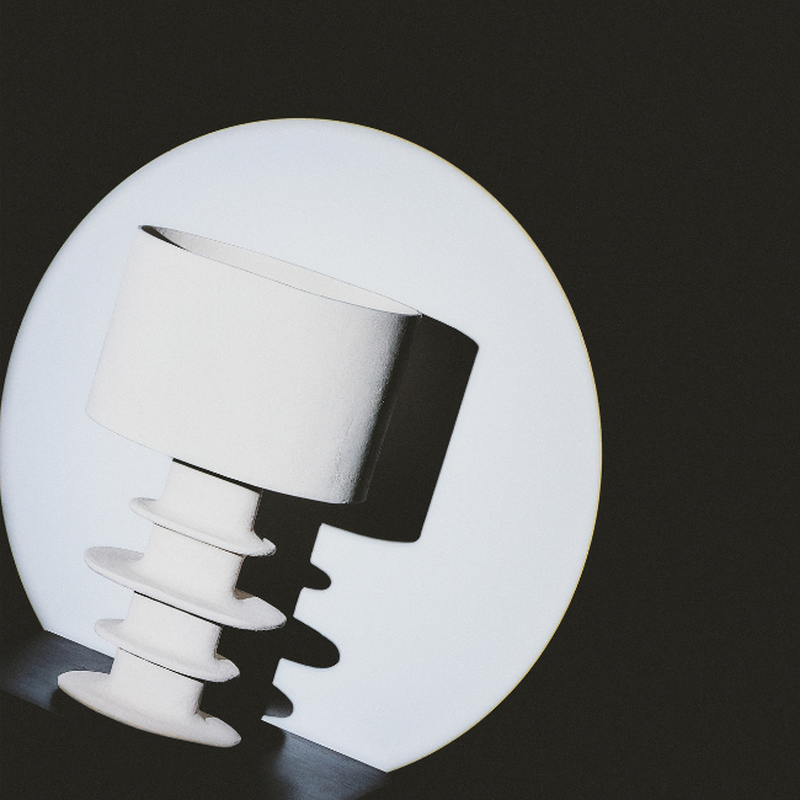
Many people first encounter Serax through a plate, bowl or carafe. Yet lighting has long been a substantial part of both the brand and the Serax collection at Bohero.
Anita Le Grelle carries her exploration of materials from tableware into lighting. Terres de Rêves includes wall lights, pendants and table lamps made from stoneware and porcelain. Light softens their ceramic volumes, while each lamp retains its presence as an object during the day.
Marie Michielssen often treats lighting as sculpture. Sebastian Herkner works with clear constructions, colour and glass. Once again, every designer is given room to approach light from a different angle.
A Serax lamp can therefore sit quietly within an interior or become the object around which the room takes shape. The creative freedom that produces strong contrasts at the table continues here on a different scale.
A Table Built Over Time
When Bohero launched in 2012, Serax was part of the selection from the start. Pieter Stockmans first drew our attention to the brand; Roos Van de Velde and Ann Van Hoey then showed us how tableware could be unconventional without becoming impractical.
Many more collections have followed. We have lived with several of them at home for years: ceramics by Roos Van de Velde, Anita Le Grelle and Frédérick Gautier, alongside cutlery by Ann Demeulemeester. It is only through using different pieces together that you discover which combinations continue to work.
A table does not need to be completed in one purchase. It often begins with a few plates or bowls that are used and enjoyed regularly. Another glass may follow later, then cutlery with a stronger contrast or a bowl that introduces colour. Not because everything needs to belong to one collection, but because each addition brings something that was still missing.
That idea does not depend on every collection remaining available indefinitely. A well-chosen plate should also hold its own when it later sits beside a design by someone else. This allows the table to evolve without having to start again each time.
A quiet foundation such as Base by Piet Boon or Cena by Vincent Van Duysen leaves room for a graphic FEAST plate, a hand-painted design by Shurleey or Marni’s expressive porcelain. Organic ceramics gain definition beside clean-lined cutlery. Different glasses or a coloured carafe can shift the mood while everything else stays.
Start with what lasts. Add what surprises.
That is what A TABLE BUILT OVER TIME means at Bohero: not a prescribed set, but a personal composition that becomes more interesting with every thoughtful addition.

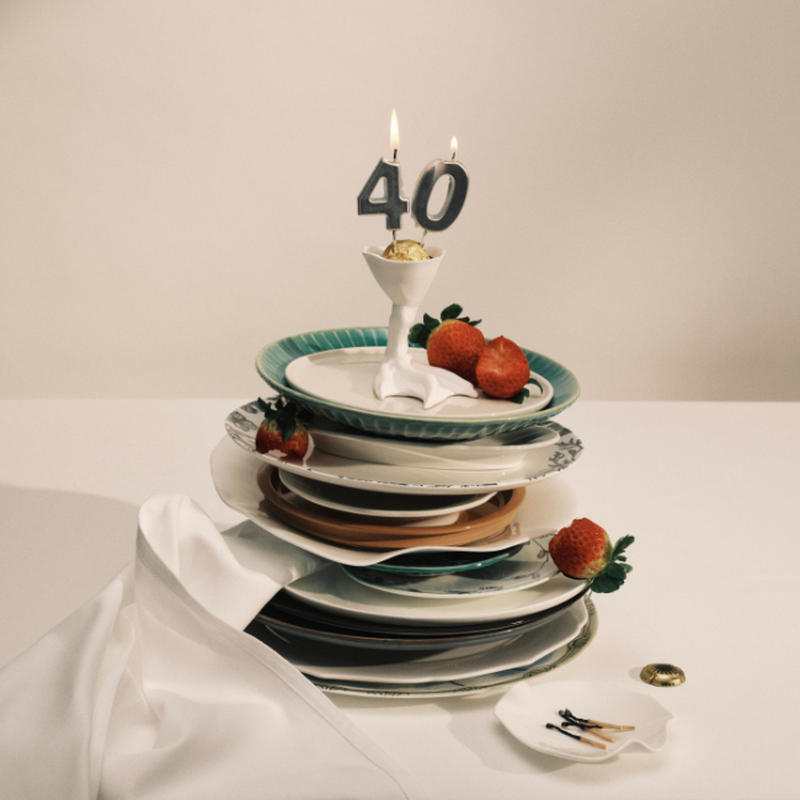
Forty years on, Serax is still evolving
Serax grew from a Belgian flowerpot business into an international design brand. It did so not by making the same thing for forty years, but by allowing designers to choose a different direction.
Sometimes that produces an entire dinnerware collection. Sometimes it results in one object that immediately stays with you. Paola Navone’s Fish & Fish carafe is a clear example: playful, practical and still one of the brand’s most recognisable designs ten years after its introduction. Perfect Imperfection, Base, Terres de Rêves, Dé, FEAST and the collections by Vincent Van Duysen demonstrate how different a lasting Serax design can look.
That variety makes choosing less predictable and much more interesting. You can begin with one designer, a material or the way you cook and eat. The next choice does not need to be identical. It simply needs to add something.
The story of forty years of Serax cannot be reduced to one defining collection. It was shaped by dozens of designers who each brought something different to the table and the interior — and by the freedom to combine those pieces on your own terms.
Frequently asked questions about Serax
What is Serax and where does the brand come from?
Serax is a Belgian design brand founded in 1986 by brothers Serge and Axel Van Den Bossche. Its name combines their first names: Ser-Ax. The company began with flowerpots and now develops tableware, glassware, cutlery, lighting, furniture and home accessories with designers from different disciplines.
Which designers work with Serax?
Serax works with designers including Roos Van de Velde, Ann Demeulemeester, Anita Le Grelle, Vincent Van Duysen, Piet Boon, Paola Navone, Pascale Naessens, Sergio Herman, Ottolenghi, Marie Michielssen, Marni and Wouters & Hendrix. Each approaches shape, material and use from a different perspective.
What makes Serax different from other design brands?
Serax does not impose a fixed house style on its designers. The brand selects strong ideas and finds the right materials, techniques and producers to realise them. The collections can therefore look very different while retaining the recognisable signature of their designer.
Can different Serax collections be mixed?
Yes. A quiet foundation can be combined with contrasting glassware, bowls, cutlery or graphic plates. Look beyond colour to material, shape and proportion. Repeating one element creates cohesion without requiring everything to come from the same collection.